Top 10 post-covid factors for event managers to consider

The hospitality industry was rocked hard by COVID-19, with in-person events grinding to a complete stop at points. As venues and event managers plan for the post-COVID uptick, though, changes will need to be considered. Here are 10 factors event managers should know for in-person events post-COVID.
1. Events need clearer contingencies
Cancellations and postponements are costly, and a pandemic makes them more unpredictable.If a venue needs to cancel, communicating early with attendees gives them time to adjust. Clear refund policies – paired with timely pay-outs – can preserve a venue’s relationship with guests.If a guest cancels, managers should have an accurate account of the financial implications in order to pivot effectively. Unclear costs can make replacement events harder to organize.
2. Value added services can generate revenue
A slump in business over the last year means event managers are working with even tighter budgets. One solution over the last year has been to cut value added services and only focus on essentials. As in-person events pick up, however, these extra services offer an opportunity to generate more revenue.Services that generate excitement and can market a venue’s services can secure future business.
3. Supply chains need to be evaluated
Suppliers faced just as much turmoil as the organizers could no longer buy from them. Before operations pick back up, event managers should assess their current supply chains to make sure they can keep up. Supply chain issues that are detected early can be addressed while there’s still time.
4. Supply chains need to be evaluated
Suppliers faced just as much turmoil as the organizers could no longer buy from them. Before operations pick back up, event managers should assess their current supply chains to make sure they can keep up. Supply chain issues that are detected early can be addressed while there’s still time.
5. Safety considerations for in-person events
Depending on the event location, managers may have to prove an event will meet all existing safety standards. This is especially true for events that need room block management. In some cases, that might even mean applying for post-COVID permits or gaining approval from the right committee.Not only is safety a major consideration for post-COVID events, but a certified standard is a great marketing tool to guests who still have their own concerns.
6. Value added services can generate revenue
Managing everything manually takes more time and labor. Using event software can automate some processes that would otherwise strain a budget or a downscaled team. Software like Cvent Passkey, for example, allows guests to self-book within an assigned room block online. It also has tools for upgrading rooms, extending stays and updating reports in real time.
This reduces admin costs and allows event managers to focus on the tasks that need them most.
7.Venues are eager to jump start operations
Venues are keen to make up losses with events, but this will need a level of caution to execute. Staff reductions, budget cuts and a less stable influx of guests will all affect the level of event that can be realistically pulled off.
In these early stages, it may be more important to manage within ones means to lay the foundation.
8. Communication isn’t strictly digital anymore
Many organizers pivoted to virtual events to keep business going, but in-person events mean in-person contact. Dress codes, guest training for staff, and presentation will once again be major factors.Sharpening those skills is the first step to presenting guests with a professional and fulfilling event.
9. Attendance tracking can minimize disruptions
Early communication is a big theme here for a reason. Even if an event stays on schedule, individual guests might cancel. Tracking attendance allows for better room block management and allows event planners to dedicate resources to those in attendance.
Up-to-date attendance numbers reduce wastage and make for housing management and organizing – and that’s the goal in these early stages.
10. Event managers, not venues, are in demand
Guests want an organizer who can help them manage an in-person event post-COVID, and venues want managers who can generate good business. From room block management to sourcing supplies and executing, this is the time for event managers to show how valuable they are.
Venues may be more willing to offer higher commission rates to secure the best managers. While this trend won’t last forever, it’s a good time for professionals to negotiate their service contracts.
11. Hybrid events can help scale back up
Depending on room block availability and venue resources, not all businesses will be able to host events at full capacity from the start. Hybrid events provide a middle ground by using streaming and virtual rooms to supplement in-person events.
Doing this allows businesses to slowly scale operations back up to full capacity while generating revenue. It also allows event managers to work through early issues while the stakes are still low – and that troubleshooting experience will pay dividends on the bigger stage.
Hospitality in a post-pandemic world is possible – it just needs clever planning, strong communication and an eye for spotting problems early. Those qualities have always been important for event managers. Now more than ever, though, they can be used to navigate the new landscape and breathe life back into the industry.


Read More Insight
View AllRoom Block Management
Tips
2 Min
The landscape of event planning and group bookings is evolving rapidly. As we move into 2024, it's crucial for event planners and hospitality managers to stay ahead of emerging trends in the industry. This comprehensive guide dives into the top 10 trends shaping group bookings for events, providing valuable insights for those at the forefront of this dynamic sector.
Trend 1: Advanced Personalization
The future of group bookings is about creating unique, tailored experiences for every attendee. Leveraging data analytics and customer insights, event planners can customize everything from room allocation to personalized itineraries, ensuring that each participant’s preferences are met. This trend isn’t just about satisfying needs; it’s about exceeding expectations and creating memorable experiences.
Trend 2: Deeper Sustainable Practices
Sustainability is no longer an option but a necessity. In 2024, groups are increasingly looking for venues and events that align with their environmental and social values. This includes everything from energy-efficient venues to socially responsible practices, such as supporting local communities and businesses.
Trend 3: Sophisticated Contactless Technology
The integration of contactless technology in event planning and group booking is becoming more sophisticated. From digital check-ins to mobile event apps, these technologies enhance efficiency, improve safety, and provide a seamless experience for attendees.
Trend 4: Robust Data Security
With the rise of digital solutions, protecting client data in group bookings has never been more critical. Event planners and hospitality providers must ensure that their systems are secure and compliant with the latest data protection regulations, building trust and reliability.
Trend 5: Enhanced Storytelling in Marketing
Storytelling becomes a powerful tool in attracting diverse groups. Creating compelling, engaging narratives around group events helps connect with potential clients on an emotional level, showcasing the unique experiences and memories they can expect.
Trend 6: Comprehensive Health and Wellness Focus
The focus on health and wellness in group events is expanding beyond physical well-being to include mental and emotional health. This encompasses everything from yoga sessions and mindfulness workshops to healthy catering options, catering to the growing demand for holistic wellness.
Trend 7: Versatile Multifunctional Spaces
The demand for versatile, multifunctional spaces in venues is on the rise. These spaces need to adapt to various event types and group sizes, offering flexibility and innovation in layout and design.
Trend 8: Proactive Online Reputation Management
In the digital age, maintaining a positive online reputation is crucial. Proactively managing online reviews and feedback, and engaging with clients on social media platforms, can significantly impact the perception and success of group bookings.
Trend 9: Intelligent Use of Artificial Intelligence
AI is transforming group bookings by enhancing customer service and operational efficiency. From personalized recommendations to predictive analytics for better event planning, AI is a game-changer in the industry.
Trend 10: Dynamic Pricing Strategies for Room Blocks
In 2024, the approach to pricing room blocks will become more dynamic and data-driven. Utilizing real-time market data and predictive analytics, hotels and event planners will be able to adjust prices based on demand, event size, and market trends. This strategy will not only optimize revenue but also provide more flexible pricing options for group bookings, catering to a broader range of budgets and needs.
As we embrace these trends, the future of group bookings for events looks promising and exciting. Staying informed and adaptable to these developments is crucial for anyone in the hospitality and event planning industry.
Explore Resiada’s cutting-edge solutions for group bookings and stay ahead in the ever-evolving world of event planning.
Top 10 Group Booking Trends for 2024: Navigating the Future with Resiada
Product Update
2 Min
We’re excited to let you know about our updates that will enhance your experience with Resiada. These updates have been based on your feedback and the value they bring to you. Let's dive in to review the highlights of Resiada 2.2
Alternative payment options
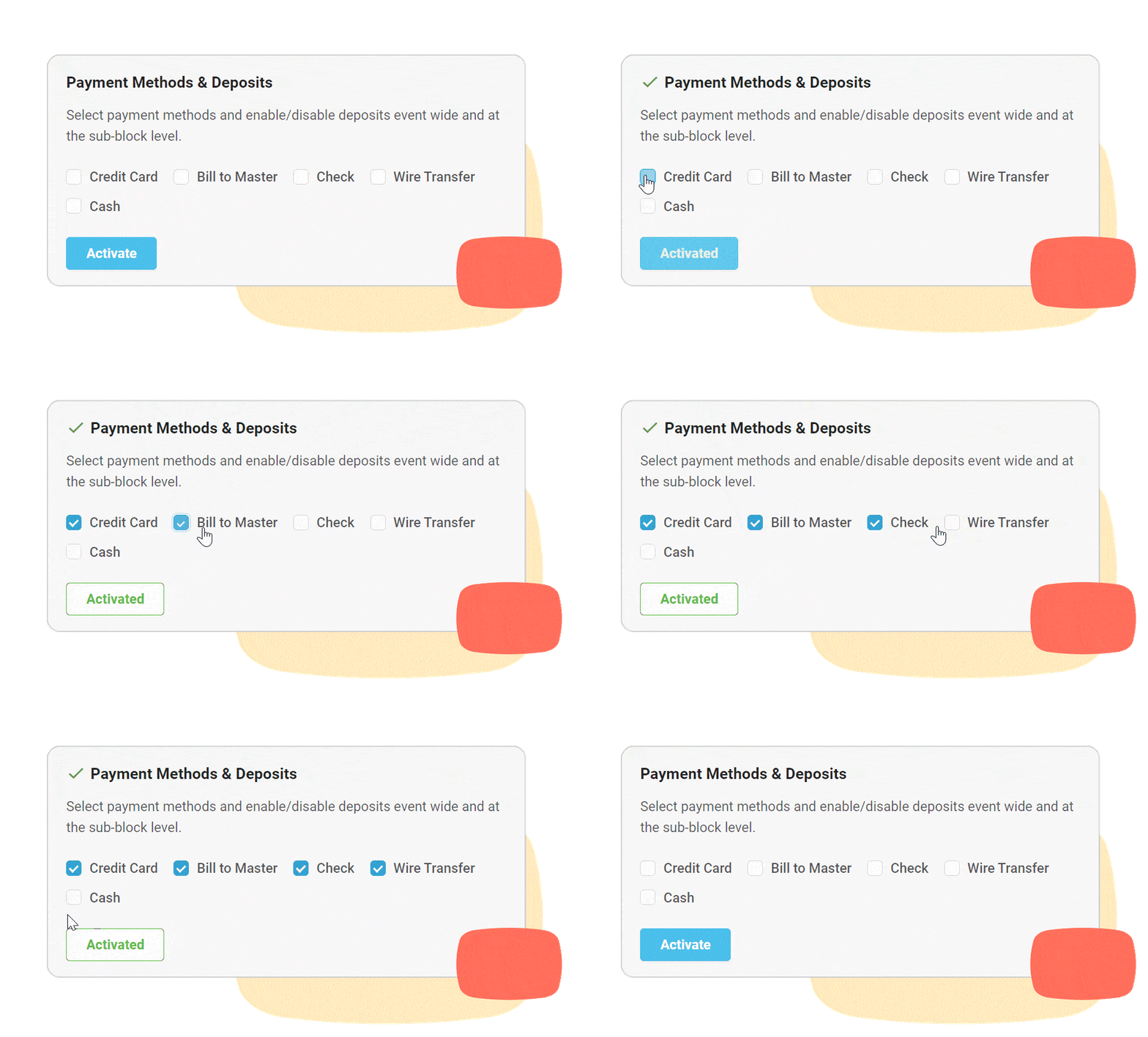
We know how crucial it is to offer flexible payment options, and we’re excited to let you know that we’ve introduced alternative payment methods beyond credit cards. With this update, you can now collect payments through Bill to Master, Check, and ACH. You’ll also have the ability to customize payment methods for each subblock to meet your specific needs. These enhancements apply to front-end booking, bulk upload, and admin reservation processes, and all relevant reports have been updated to include the new payment methods.
Mobile booking experience update
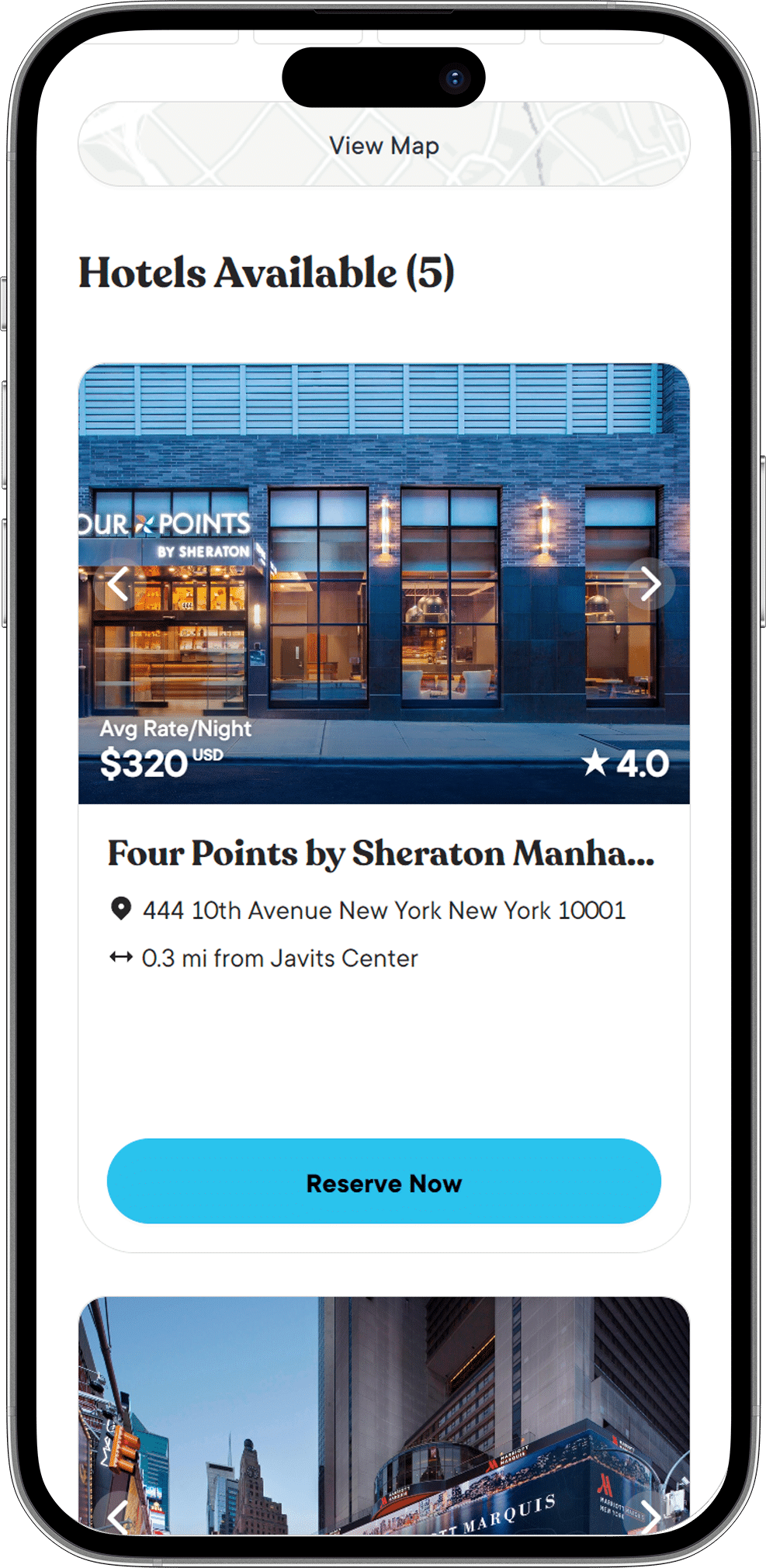
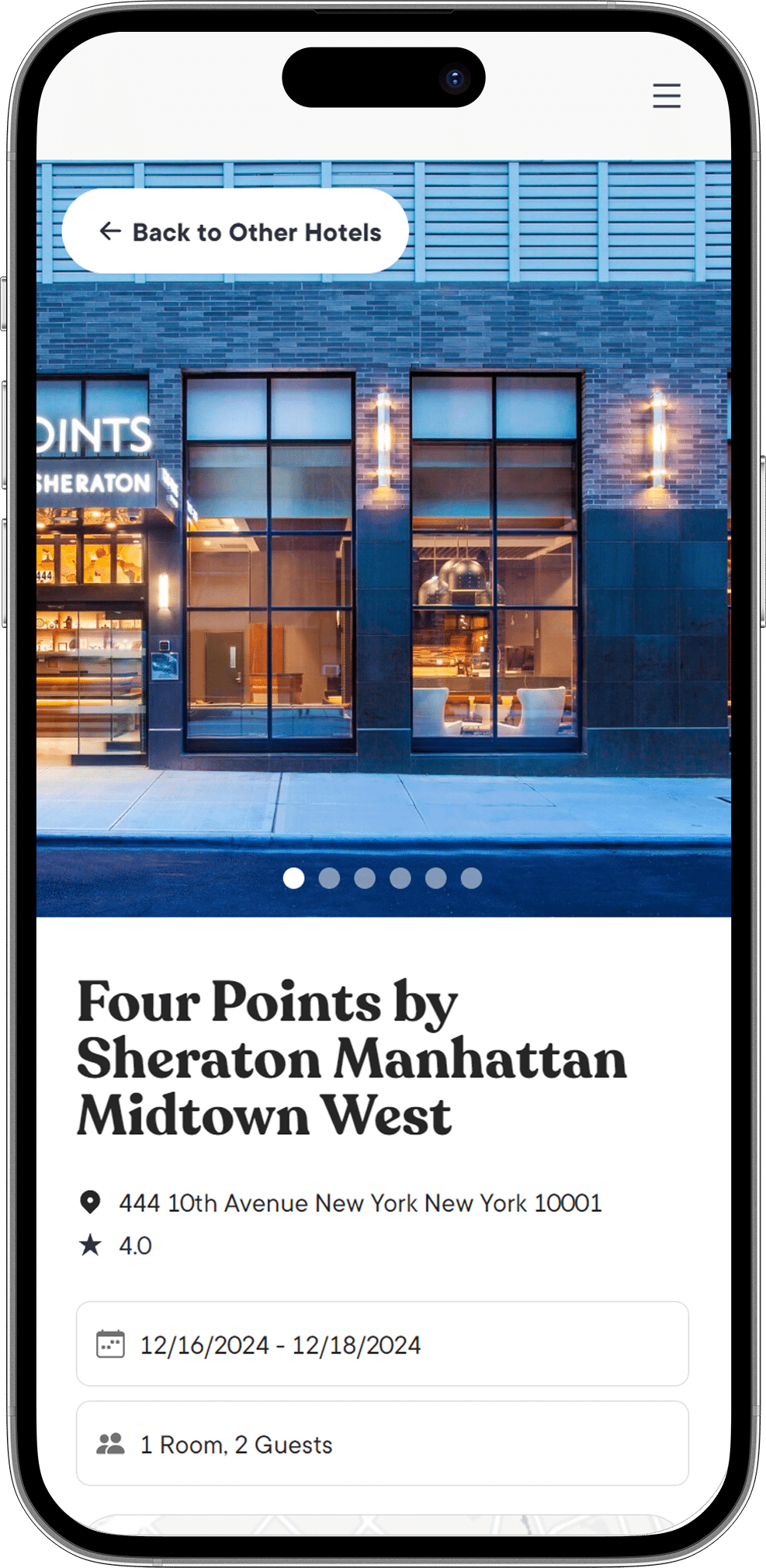
We understand that more and more people are booking their travels through their mobile devices. To cater to this growing trend, we have made significant improvements to our mobile booking process. We have enhanced the landing page, hotel details, payment page, and reservation manager to make the mobile booking experience more pleasant and efficient. Our goal is to ensure that your customers can easily navigate and complete their bookings on their mobile devices.
.webp)
Hotel taxes & fees update
We have taken your feedback into account and made significant improvements to our Fees & Taxes module, specifically regarding event fees and taxes. You now have more control over the fee structure and can choose to collect fees using your customer merchant account. Moreover, you can collect fees during the booking process, making it a smoother and more transparent experience. These enhancements provide you with greater flexibility to customize the module according to your specific requirements.
New & updated reports
We are excited to announce some new reports and updates.
- New – The Bill to Master Summary report gives you a brief summary of the billings to master accounts.
- New – The Arrears report helps you keep track of outstanding payments and overdue accounts.
- New – The Balance Due report provides an overview of customer balances.
- New – The Payment Reconciliation report gives detailed information to help reconcile payments.
- Updated – We have also included alternative payment options in the Wait List report, Wait List Summary report, Pending Reservations report, and Rooming List Export to ensure accuracy and relevance.
Product Update: Release 2.2
Event
Room Block Management
Tips

2 Min
Booking a hotel block for a group can be challenging, especially when you have many people to accommodate. It requires careful planning, good communication, and the ability to negotiate with hotel representatives. However, with the right steps, it can be an easy and successful process. In this guide, we will walk you through the steps to book a hotel block for a group, the factors to consider, and the FAQs to answer your questions.
Step 1: Determine Your Group’s Needs
Before you start searching for a hotel, you need to know the number of people in your group, the dates of your stay, and the type of rooms you need. This information will help you narrow down your search and find hotels that meet your requirements.
Step 2: Research and Compare Hotels
Once you know your group’s needs, you can start researching hotels that can accommodate your group. Look for hotels that offer group rates or have a history of accommodating groups. Compare rates, amenities, and locations to find the best hotel for your group.
Step 3: Contact the Hotel
After you have found a hotel that meets your requirements, contact the hotel directly to inquire about group rates and availability. Be sure to ask if they offer any special amenities or services for groups, such as free breakfast, shuttle service, or meeting rooms.
Step 4: Negotiate the Contract
When you have found a hotel that meets your group’s needs and budget, it’s time to negotiate the contract. Be sure to read the contract carefully and ask questions about any clauses that are unclear. Negotiate the room rates, cancellation policy, and any special amenities or services that you would like to have. You can also connect with companies that offer the service to contract and source locations for your event, if this is an interest, please reach (anton@resiada.com) and we would be happy to help make some recommendations.
Step 5: Sign the Contract and Follow Up
Once you have negotiated the contract and are satisfied with the terms, it’s time to sign the contract and make a deposit to secure the reservation. Be sure to follow up with the hotel a few weeks before your stay to confirm the reservation and make any necessary changes.
Factors to Consider When Booking a Hotel Block for a Group:
- Location: Choose a hotel that is conveniently located for your group’s activities and transportation.
- Amenities: Look for hotels that offer amenities that your group will enjoy, such as a pool, fitness center, or restaurant.
- Room Types: Consider the types of rooms that your group needs, such as double rooms, suites, or accessible rooms.
- Group Rates: Look for hotels that offer special rates for groups.
- Cancellation Policy: Make sure you understand the hotel’s cancellation policy before signing the contract.
FAQs:
Q: How far in advance should I book a hotel block for a group?
A: It’s best to book a hotel block for a group as early as possible, ideally six to twelve months in advance.
Q: Do I need to make a deposit to secure the reservation?
A: Yes, most hotels require a deposit to secure a reservation for a group.
Q: Can I make changes to the reservation after I sign the contract?
A: Yes, you can make changes to the reservation, but it’s best to do so as early as possible to avoid any penalties or fees. These changes post-contract are typically known as amendments.
Booking a hotel block for a group can be a daunting task, but with the right steps and information, it can be an easy and successful process. By determining your group’s needs, researching and comparing hotels, contacting the hotel directly, negotiating the contract, and following up, you can book a hotel block that meets your group’s requirements and budget.
Remember to consider the location, amenities, room types, group rates, and cancellation policy when booking a hotel block for a group. By doing so, you can ensure that your group will have a comfortable and enjoyable stay.
Additionally, it’s important to stay in communication with the hotel throughout the booking process. Make sure to follow up with the hotel representative to ensure that everything is on track and to address any concerns or questions that may arise. This is also where Resiada can help you with keeping a pulse on how your contracted block is picking up. Request a demo to explore how.
How to Book a Hotel Block for a Group? A Comprehensive Guide

USA
6823 S. Eastern Ave., Ste. 101
Las Vegas, Nevada
89119, USA
Las Vegas, Nevada
89119, USA
Canada
1 Marmac Dr. Suite 200,
Toronto, Ontario
M9W 1E7, Canada
Toronto, Ontario
M9W 1E7, Canada
Our affiliates